
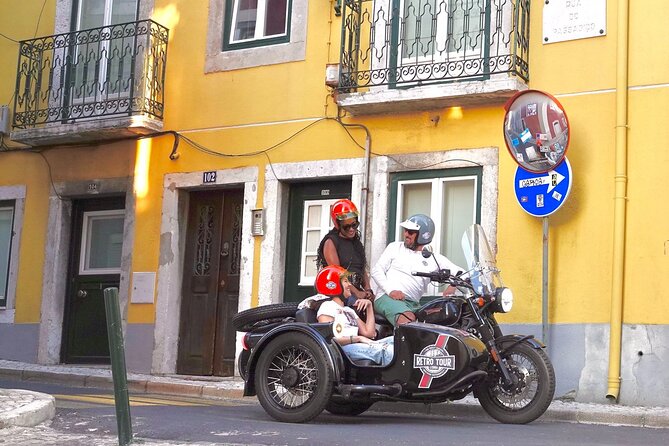
REVIEW · LISBON MOTORCYCLE TOURS
Lisbon El Cristo-Rei – Private Vintage Sidecar Tour
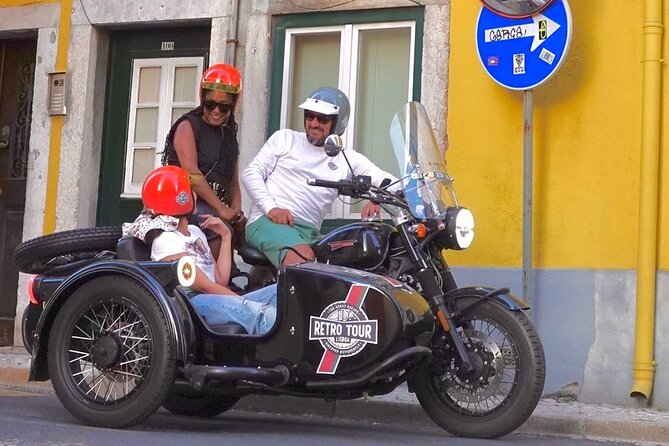
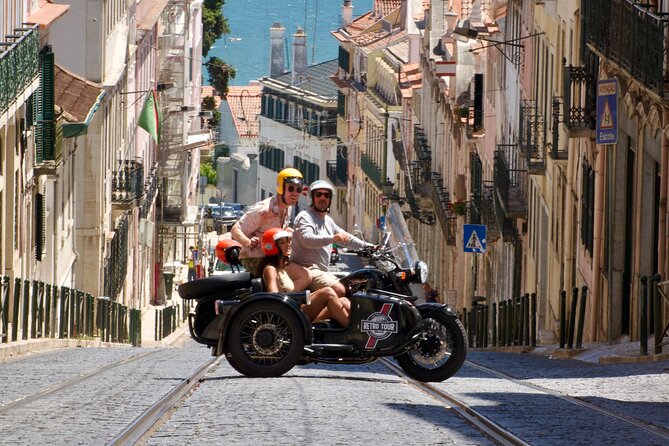
Lisbon looks better from a sidecar. This private ride links old-city sights with Cristo-Rei across the Tagus, giving you a quick, breezy way to cover ground. I especially like the freedom to stop for photos and the chance to leave central Lisbon, something many city tours cannot do. The main drawback is the price: $360.23 for up to two people is a serious splurge for only two hours.
The ride includes a helmet, gloves, goggles, private transport, and support. The sidecars are described as new and comfortable, with phone chargers, and guides Stéphane and Frédéric are praised for their friendly, easygoing manner. If rain or poor weather arrives, the tour may be rescheduled or refunded, so keep your plans flexible.
Key reasons to consider this sidecar ride
- Cristo-Rei across the Tagus: Cross the 25 de Abril Bridge and reach the foot of Lisbon’s great Christ statue.
- A private group of two: You share the sidecar only with your companion, not a busload of strangers.
- A useful mix of city and river views: See Bica, historic sites, Almada, the bridge, and Cristo-Rei in one short outing.
- Photo stops are part of the appeal: The guides can pause when you want a better view or a picture.
- A comfortable vintage-style vehicle: Helmets, gloves, goggles, phone chargers, and newer motorcycles are provided.
- An informal guide experience: Stéphane and Frédéric are praised for warmth, good humor, and a relaxed pace.
Why a private sidecar works well in Lisbon
Lisbon is built on hills, tight streets, and broad river viewpoints. A sidecar gives you a more open view than a car and a more personal ride than a sightseeing bus. You can see the city as you move through it, with a little wind in your face and fewer barriers between you and the streets.
The private format matters. Your group can ask to stop for a photograph, spend a little more time at a viewpoint, or adjust the emphasis of the ride. That does not turn two hours into a full-day tour, but it makes the short duration more useful.
I also like the route’s reach. Many central Lisbon tours stay on the north bank of the Tagus. This one crosses to Cristo-Rei, so you get a change of setting and a strong view back toward the city. The sidecar is not just a novelty here. It is a practical way to combine several far-flung sights without arranging a separate taxi or ferry connection.
Still, two hours goes quickly. You should see this as a compact introduction, not a detailed architectural tour. At $360.23 per group of up to two, the cost works out to about $180 per person for two people. That is reasonable only if you value privacy, flexible stops, and the unusual vehicle. If your main goal is the lowest-cost way to see Cristo-Rei, other transport options will cost less.
More Sidecar Tours in the world:
- Barcelona Private Tour by Sidecar Motorcycle
★ 5.0 · 1,750 reviews - Paris Vintage Private City Tour on a Sidecar Motorcycle
★ 5.0 · 417 reviews - Paris Highlights city tour on a vintage Sidecar Motorcycle
★ 5.0 · 168 reviews
Starting on Rua Garrett in central Lisbon
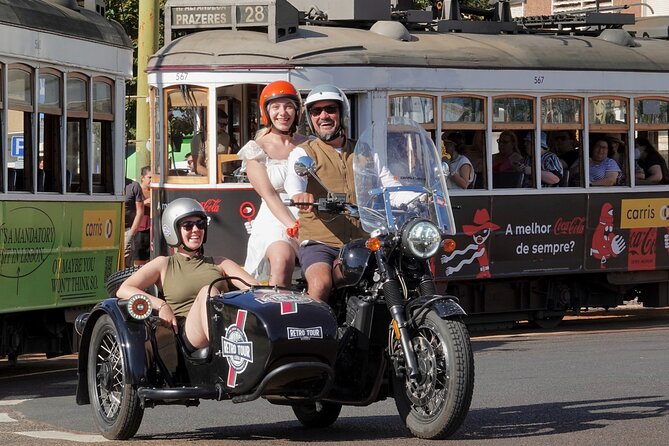
The advertised starting point is R. Garrett 88, near the center of Lisbon. This puts you in a convenient part of town for a morning or afternoon ride, with the tour ending at Praça do Comércio or another central drop-off.
Pickup is offered, which helps if you are staying in central Lisbon. Confirm the exact pickup details when booking, since the listed meeting point and pickup option are not quite the same thing. The tour is offered in English, and confirmation arrives at booking.
Before setting off, you receive the basic riding equipment: helmet, gloves, and goggles. The equipment matters more than it may sound. A sidecar ride can be breezy, and eye protection is useful on the move. The motorcycles and equipment are described as new, with a charger available for your phone.
The ride is private, but the sidecar arrangement may not suit every person. You should be comfortable sitting on a motorcycle-style vehicle for roughly two hours. The available information says most people can participate, and service animals are allowed. If you have specific mobility concerns, ask the operator before booking.
Bica and Lisbon’s yellow tram
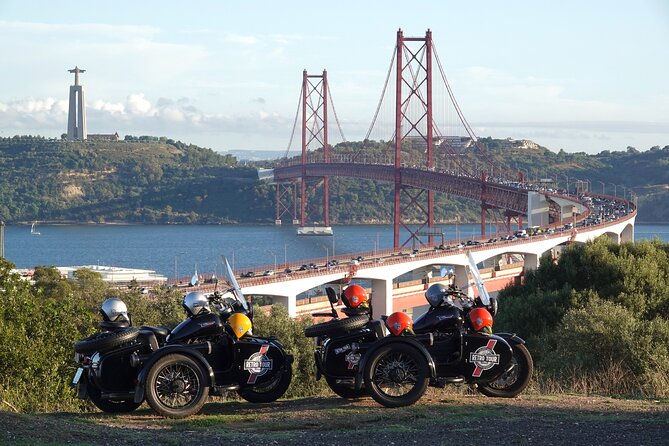
The first named stop is Rua da Bica, one of Lisbon’s most recognizable streets. Its yellow tram is the star here, climbing one of the city’s steep slopes between closely packed buildings.
The stop is listed as about five minutes, with no admission fee. That tells you what to expect: a quick photo opportunity rather than a long visit. The sidecar is useful in this setting because it can bring you near a landmark that is awkward to reach by a large vehicle.
I would treat this as a visual introduction to Lisbon rather than a full tram experience. You may photograph the famous yellow car and the narrow street, but the short stop will not give you time to explore the surrounding neighborhood in detail. If Bica is high on your list, tell the guide at the start so the photo stop gets the attention you want.
A historic square with church, aqueduct fountain, and 1974 politics
One part of the route visits a very layered historic area. The details supplied describe a fourteenth-century church linked with Portugal’s preserved independence, archaeological finds from Portuguese soil and other places, and a fountain connected with the Águas Livres aqueduct.
The aqueduct was built in the eighteenth century and extended through about 58 kilometers of galleries. Its water system helped serve western parts of Lisbon, including areas around Bairro Alto, Ajuda, Belém, and Amoreiras. That makes the fountain more than a decorative stop. It points to the practical problems of supplying a growing city.
The same area is tied to the end of Portugal’s dictatorship in 1974. Marcello Caetano, who had replaced António de Oliveira Salazar in 1968, was deposed and sent to Brazil. In a short visit, you get an unusual combination of religious architecture, archaeology, engineering, and modern political change.
The exact name of this stop is not specified in the available details, so you should ask the guide to identify it clearly when you arrive. That small request can make a big difference. The stop has several layers, and a quick explanation will help you connect the church, fountain, archaeological material, and political events.
More Vintage and Classic Motorcycle Tours in the world:
- Hanoi Motorbike Tour: Food, Culture and Fun by Vintage Motorbike
★ 5.0 · 6,699 reviews - VIETNAM BACKSTREET TOURS: Explore Bat Trang Ceramic Village By Minsk Motorcycle
★ 5.0 · 228 reviews - 2hr Retro Motorcycle Sidecar Oslo Highlights Tour
★ 5.0 · 115 reviews - Hanoi Food, Culture, Sightseeing & Fun By Vintage Motorbike
★ 5.0 · 86 reviews
Visconde do Sacavém Palace and Lisbon’s tile tradition
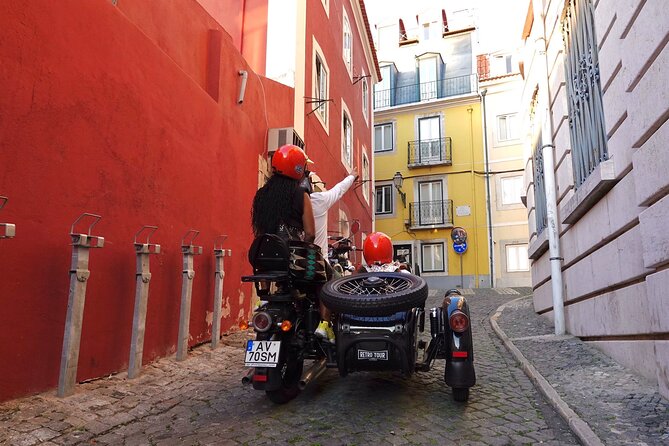
The Visconde do Sacavém Palace adds a different note to the route. Built between 1897 and 1900, it is decorated with magnificent azulejos, the painted ceramic tiles that appear across Portuguese buildings.
The palace is classified as municipal heritage and is described as unusual because it was completed in only three years. Even if you do not enter, the exterior gives you a useful look at how decorative tile became part of Lisbon’s architectural identity.
The palace stop is also a reminder that Lisbon sightseeing is not only about grand monuments. Smaller civic buildings and private residences often reveal the city’s taste more clearly than a major attraction. Since the schedule is only about two hours, expect an outside look or a short visit rather than an extended palace tour.
Crossing the 25 de Abril Bridge
The bridge crossing is one of the most memorable parts of this experience. Built from 1962 to 1966, the structure was designed to make movement between the two banks of the Tagus easier. It has carried three names: the Bridge over the Tagus, the Salazar Bridge, and the 25 de Abril Bridge.
The name changes reflect Portugal’s political history. The bridge first carried Salazar’s name during the dictatorship, then took its current name after the 1974 revolution. You are not just crossing a piece of infrastructure. You are passing through a physical reminder of the country’s change in government.
From a sidecar, the crossing should feel more open than it would inside a closed car. You can look toward the river and the city, though you should keep your attention on the ride and follow the guide’s safety instructions. The bridge is a transport link, not a scheduled sightseeing platform, so do not expect a long stop in the middle.
The crossing also explains why the tour offers something different from a standard central Lisbon route. In a short time, you move from old streets and yellow trams to the broad Tagus and the south-bank view of Lisbon.
Cristo-Rei, the tour’s main destination
The Sanctuary of Christ the King is the main reason many people will book this ride. The monument was inspired by the Christ the Redeemer statue in Rio de Janeiro after a Portuguese cardinal visited Corcovado in the 1930s.
The Lisbon statue took shape between 1949 and 1959, after the Second World War. Its purpose was connected with a desire for Christ’s protection over Lisbon, giving the monument both a religious and civic role.
The stop lasts about 15 minutes and includes admission. That is enough for a clear look at the statue and time for photographs, but it is not a long sanctuary visit. The description places you at the foot of Cristo-Rei, where the scale of the monument and the views back toward Lisbon are the main attractions.
You should keep your expectations precise. This is not a guided religious tour or a long museum visit. It is a scenic stop with historical context, and the sidecar makes reaching it far easier than it would be on foot from central Lisbon.
For many couples, this will be the best value part of the route. You cross the river, see one of the region’s most recognizable monuments, and return without spending much of your day on connections. The fifteen-minute visit is brief, but it fits the compact nature of the tour.
Coffee and art at Casa da Cerca
Casa da Cerca, the Contemporary Art Center, is scheduled for about ten minutes. The stop includes a coffee break, an art gallery, and a view framed by umbrella pines.
This is a pleasant change after the ride and the bridge crossing. It gives you a chance to pause, take in the setting, and see a small cultural venue rather than moving from one outdoor viewpoint to another.
Ten minutes is not enough for a serious look at the art center. You may get only a taste of the gallery and its setting. I would treat the stop mainly as a short refreshment break with a good view, not as a museum visit.
The fact that coffee is included in the stop but snacks are not included is worth noting. If you need more than coffee, eat before the tour or carry something suitable. The provided details do not specify the exact coffee arrangement or menu.
What the ride feels like in practice
The strongest part of the experience is its mood. You are not sealed behind a coach window, and you are not walking up every hill. The sidecar gives you a gentle sense of movement while keeping the ride social, since you can speak with the guide as you go.
The equipment also appears well considered. Helmets, gloves, and goggles are supplied, and phone chargers are available. A customer described the sidecars as comfortable and the motorcycles as new, which is useful reassurance for anyone wondering if the vintage style means old or poorly equipped machinery.
The guide relationship is important. Stéphane and Frédéric are praised for kindness, attentiveness, and a relaxed approach. The ride can be personalized around the places you most want to see, with photo stops when requested.
That flexibility has limits. The tour lasts about two hours, and a private guide cannot create extra time. If you want long visits at Bica, the palace, Cristo-Rei, and Casa da Cerca, you will need a longer tour or separate visits. Use the ride to sample several areas, then return on your own to the place that interests you most.
Price, timing, and who gets the best value
The listed price is $360.23 per group, with up to two people included. For a couple, that is about $180.12 each. For one person, the value is much weaker because the same group price applies.
I think the price makes sense for a special occasion, a first day in Lisbon, or a couple who wants a private overview without planning several separate trips. It is less convincing for budget visitors or anyone who prefers museums and long guided walks.
The average booking lead time is about 12 days, so you do not need to reserve months ahead based on the information provided. Still, booking ahead gives you a better chance of finding a suitable time, especially because the experience depends on good weather.
Free cancellation is available up to 24 hours before the start time for a full refund. Changes or cancellations inside that window are not accepted for a refund. Poor weather can lead to a new date or a full refund, which is useful for an open-air ride.
Should you book the Lisbon Cristo-Rei sidecar tour?
I would book it if you want a private, unusual way to see both sides of the Tagus in a short time. The combination of Bica, azulejos, political history, the 25 de Abril Bridge, Cristo-Rei, and Casa da Cerca gives you more variety than a simple city-center ride.
It suits couples, first-time visitors, and anyone who values personal attention and easy photo stops. The ride is also a good choice if you want Cristo-Rei but do not want to spend half a day arranging transport.
I would skip it if the price feels uncomfortable, if you want detailed time inside each attraction, or if poor weather is likely during your visit. For everyone else, the private sidecar format offers a memorable two-hour introduction to Lisbon, with enough flexibility to feel personal rather than programmed.
FAQ
How long does the sidecar tour last?
The tour lasts approximately two hours.
How much does the tour cost?
The price is $360.23 per group of up to two people.
Is the tour private?
Yes. Only your own group participates.
Where does the tour start?
The listed starting point is R. Garrett 88, 1200-204 Lisboa, Portugal. Pickup is also offered.
Where does the tour end?
The tour ends at Praça do Comércio, with drop-off available in central Lisbon or at the starting point.
Is admission to Cristo-Rei included?
Yes. Admission to the Sanctuary of Christ the King is included.
What equipment is provided?
A helmet, gloves, and goggles are provided. The sidecars also have phone chargers.
What happens if the weather is poor?
The experience requires good weather. If it is canceled because of poor weather, you can receive a different date or a full refund.
Just added around the world
- Visit 5 Districts & The Hidden Gems In Saigon By Motorbike★ 5.0 · 8 reviews
- Motorcycle rental Trogir / BMW F850GS / Your own motorbike tour★ 5.0 · 2 reviews
- Motorbike adventures on a dual purpose motorbike in the Garden Route and Karoo.★ 5.0 · 3 reviews
- 1250cc Motorcycle Rental from Turda★ 5.0 · 4 reviews
- 7 Day Best of Transylvania Motorcycle Tour from Cluj★ 5.0 · 4 reviews
- Angkor Wat Bakeng Sunset by Motorcycle Private Tour★ 5.0 · 2 reviews
- Motorcycle day tour to Rila monastery★ 5.0 · 2 reviews
- Blue Eye Motorbike Tour★ 5.0 · 10 reviews
Lisbon Motorcycle Tours, compared.

Lisbon Half-Day Handpicked – Private Vintage Sidecar Experience
Read our review →


Browse the lists this tour appears in