REVIEW · 7-DAY EXPERIENCES
7 Day Best of Transylvania Motorcycle Tour from Cluj
The best roads are not always the fastest ones. This seven-day ride links Transalpina and Transfagarasan, two of Romania’s great mountain routes, with castles, Saxon villages, and medieval towns. I like the mix of serious riding and cultural stops, and I also like the small-group format, capped at 10 people. The main consideration is that this is an active trip with long days in the saddle, steep roads, and a 1,200-step climb to Poienari Fortress.
I also like the overnight plan: six nights split between 3-star and 4-star hotels and local guest houses, with six breakfasts included. Alexe or Alex leads the riding and route briefings, while Claudia helps with the arrangements. Past riders especially praise the detailed route planning, good rental motorcycles, and the care taken to keep a delayed booking alive until the trip finally happened.
Key things to know before you book
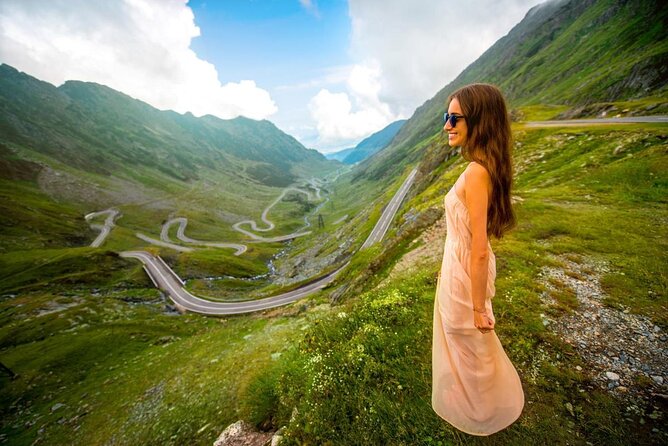
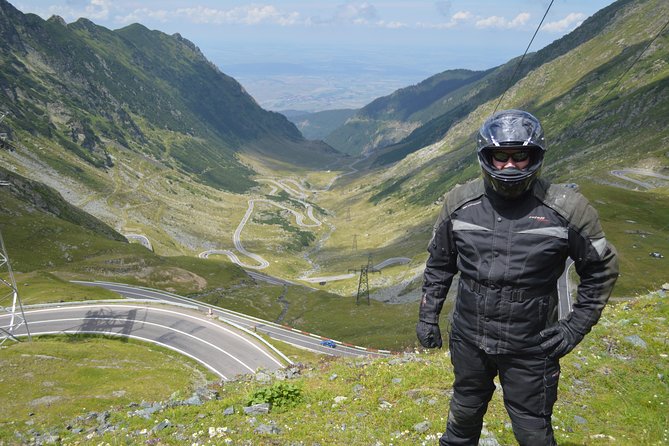
- Two famous Carpathian roads: Ride the twisting Transfagarasan and reach 2,145 meters at Urdele Pass on the Transalpina.
- A strong castle lineup: Visit Bran Castle, Poienari Fortress, Rasnov Citadel, Peles Castle, and the citadel at Alba Iulia.
- Real village stays: Two nights in guest houses add a more local feel than a week of standard hotels.
- Small group riding: The maximum group size is 10, with an English-speaking motorcycle guide and a daily route briefing.
- Bring proper gear: You need a helmet, gloves, jacket, pants, boots, passport, and unrestricted motorcycle license.
- Good value for serious riders: At $1,144.09 per person, the price includes lodging, breakfasts, guiding, airport transfers, and route support, but not motorcycle rental, fuel, meals, or attraction tickets.
Seven days of roads, castles, and Romanian village life
This tour is built for someone who wants more than a motorcycle photo on the Transfagarasan. You ride across Transylvania while stopping often enough to understand the region’s medieval past, Romanian royal story, and Saxon traditions.
The route has a clear rhythm. Some days focus on old towns and castles. Others give you long stretches of mountain road, sharp bends, and high passes. That variety is the tour’s best feature, though it also means you should expect busy days rather than slow mornings and long café stops.
The guide provides a general map and a daily route briefing. That matters here. Mountain roads can demand your full attention, and having the day’s route explained before departure helps you understand where the challenging riding comes in.
You can bring your own motorcycle or rent a BMW motorcycle. The tour operator does not include the rental in the stated price, so ask for the current motorcycle cost before committing to a final budget.
A few more rides around the world worth a look
- Leh Ladakh Motorcycle Tour – 7 Days Of Ultimate Thrill
★ 5.0 · 17 reviews - 7 days Nepal Motorcycle tour
★ 5.0 · 12 reviews - 7-Day Tanzania Private Guide Motorcycle Safari Tour
★ 5.0 · 5 reviews
Day one: Turda Salt Mine opens the trip underground
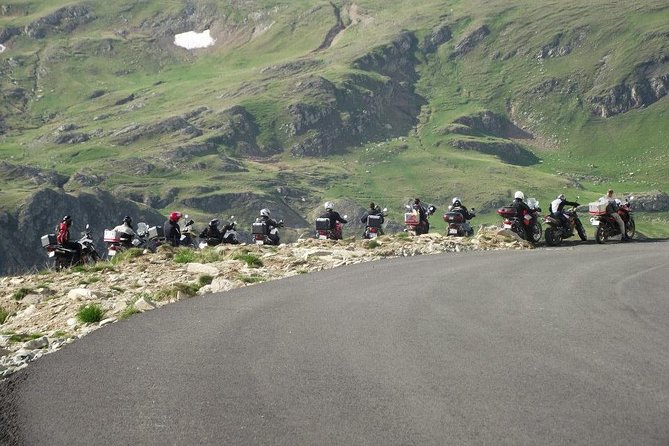
The first stop is Salina Turda, the enormous salt mine near Turda. The city began as the Roman settlement of Potaissa, and the mine is known for its large underground halls named after kings and queens.
You get about an hour here, with admission paid separately. I like this as an opening stop because it breaks up the arrival day and gives you something very different from the mountain riding ahead. Instead of beginning with a long road push, you start with an unusual piece of Transylvanian history and engineering.
The practical point is simple: wear sensible clothing and shoes for a walking visit underground, and remember that the entrance fee is not included. The tour begins at Adventure Motorcycle Tours and Rentals Romania in Turda, even though it is marketed as a tour from Cluj. Pickup is offered, and round-trip airport transfers from Cluj are included, so confirm exactly how your arrival transfer connects with the Turda meeting point.
Day two: Biertan and the medieval streets of Sighisoara
Day two moves into the Saxon heart of Transylvania. The fortified church at Biertan dates to the 12th century and is a UNESCO World Heritage Site. Its defensive walls and church architecture show how religious buildings also served as places of refuge when villages faced attack.
You have about an hour there, with admission extra. This is a compact visit, but it gives you a useful look at the fortified village tradition that appears across the region. Do not expect a long museum session. The value is in seeing the church and fortifications in their setting.
Next comes Sighisoara, another UNESCO World Heritage Site. The itinerary gives you about two hours around the medieval citadel and Clock Tower. Sighisoara is also linked to the Dracula story as the birthplace of Vlad the Impaler, the historical figure who helped inspire the fictional count.
I would use the time here for a slow walk through the old citadel rather than treating it as a quick photo stop. The Clock Tower is the visual anchor, but the real pleasure is the compact medieval center, where steep lanes and old buildings make the town easy to explore on foot.
Admission fees are separate at both stops. After a morning on the motorcycle, this is also a day when comfortable walking shoes matter.
Day three: Bran Castle and Rasnov’s hilltop fortress
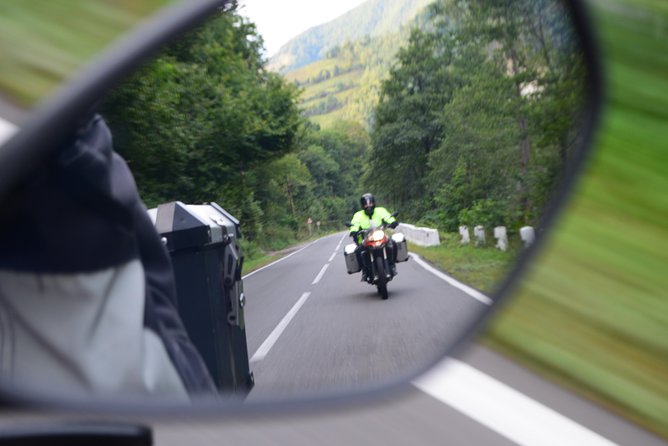
Bran Castle gets the biggest name on the route. Often called Dracula’s Castle, the fortress dates to 1377 and has become Romania’s most famous Gothic attraction.
The Dracula connection is more legend than a direct account of the fictional character’s life, so keep your expectations in check. The castle is still worthwhile for its mountain setting, fortress form, and place in popular culture. You get about an hour, and the entrance ticket is extra.
Rasnov Citadel follows, with another hour for the fortress and its panoramic view. It is described as the largest medieval peasant fortification built in Eastern Europe. That detail helps explain why this stop feels different from Bran. Bran is famous because of a legend. Rasnov shows how ordinary communities used a fortified refuge for protection.
The two stops make a good pair. Bran gives you the Dracula story and polished visitor appeal. Rasnov gives you a broader sense of rural defense and local life. If you prefer quiet historic places, Bran may feel more commercial, while Rasnov’s high position and open views may be the more satisfying visit.
Same roads, a very different day in the saddle:
- Ho Chi Minh City Street Food Tour & Sightseeing By Motorbike
★ 5.0 · 9,413 reviews - Hanoi Motorbike Tour: Food, Culture and Fun by Vintage Motorbike
★ 5.0 · 6,699 reviews - Saigon By Night and Street Food By Motorbike | Opt: Ao Dai Riders
★ 5.0 · 4,066 reviews - Private Street Food Tour by Motorbike/Car with Local Students
★ 5.0 · 3,950 reviews
Day four: Transbucegi, Babele Road, and Peles Castle
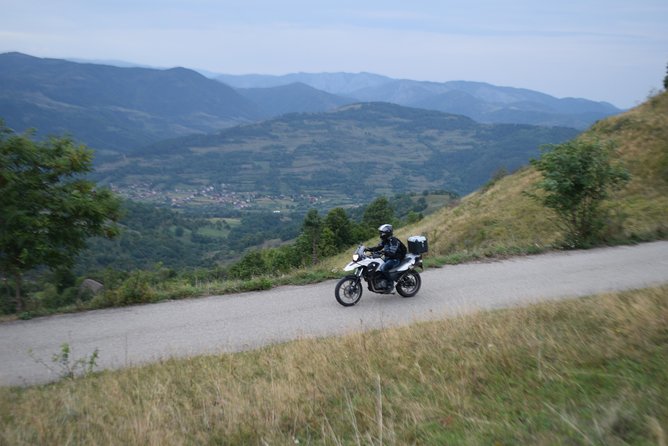
Day four is one of the most varied. You ride the Transbucegi Road into the Bucegi Mountains, reaching about 1,925 meters. Also known as Babele Road, it is narrow and sinuous, with strong mountain views.
This is a proper riding day. The road’s width, bends, and altitude mean you should be comfortable handling a motorcycle on changing grades and tight curves. The route description calls it a new challenge, which is useful guidance: this is not just a scenic drive with the motorcycle doing all the work.
Then comes Peles Castle, one of Europe’s most beautiful royal residences and a former home of Romania’s monarchs. The visit lasts about an hour, and admission is not included. Peles gives the tour a different historical note. After medieval fortresses and Dracula associations, you see a royal residence tied to Romania’s modern monarchy.
The one-hour visit is enough to see the castle, but it is not a full architectural study. If royal interiors are your main interest, you may want to ask how much time is available inside rather than only around the grounds.
Day five: The famous bends of Transfagarasan
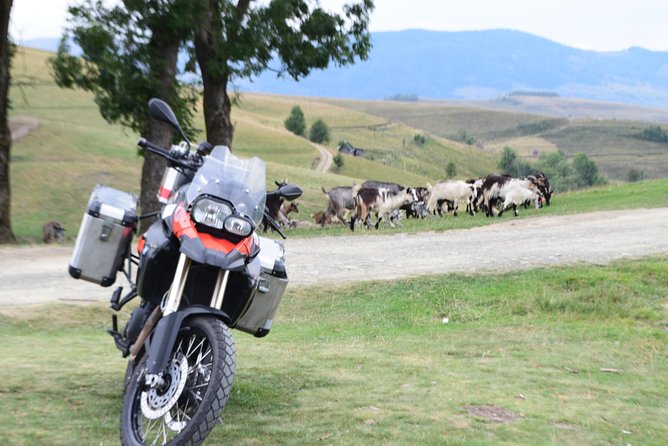
For many riders, this is the day that justifies the trip. The Transfagarasan Highway was built between 1970 and 1974 as a military route under Nicolae Ceausescu, after the Soviet invasion of Czechoslovakia in 1968. It climbs through the Carpathians in a long series of bends and is widely known as one of Europe’s most demanding motorcycle roads.
The route description allows about an hour at the stop, but the real experience is the ride itself. You are here for the changing views, the curves, and the sense of crossing a major mountain barrier. The road can be technically enjoyable, but it is not a place to chase speed. Follow the guide’s briefing, keep your spacing, and give yourself room to ride within your ability.
A past rider came to Romania mainly because a television motoring program had praised the Transfagarasan, then found the wider Transylvania trip more rewarding than expected. That is a useful warning against making the highway the whole point. It is a highlight, but the castles, villages, and smaller roads give the seven days its character.
Day six: Poienari, Curtea de Arges, and Romania’s highest road
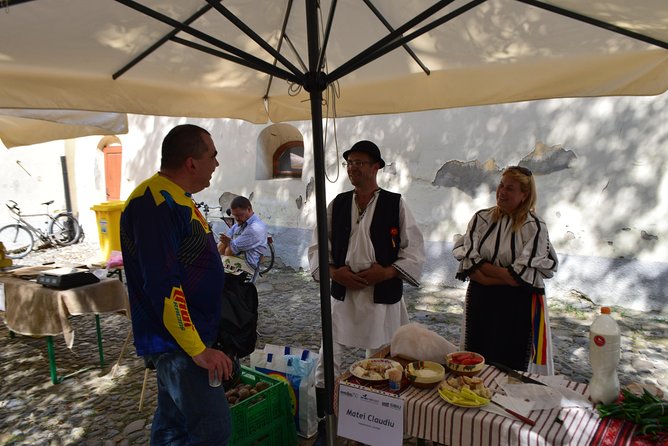
Day six brings another Dracula-linked site, but this one has a tougher approach. Poienari Fortress was the citadel of Vlad the Impaler, and reaching it means climbing 1,200 steps.
The listed visit lasts about an hour. That timing includes the climb, so the stop can feel brisk, especially if you want to pause for views or recover at the top. You need moderate physical fitness, and this is the clearest point in the trip where the tour is more than a seated motorcycle holiday.
Curtea de Arges Monastery follows. The 16th-century Byzantine cathedral is a place where history and legend meet, and the visit lasts about 45 minutes. It provides a calmer contrast after Poienari’s stairway and before the final major mountain road.
The day then reaches its riding peak on the Transalpina. At Urdele Pass, the road reaches 2,145 meters, making it the highest mountain road in the Carpathians and the highest road experience on this tour. You get about two hours for the stop and ride, with no admission fee listed.
The Transalpina is not simply a second Transfagarasan. It offers its own high-altitude character, and the combination of both roads makes this itinerary especially attractive to riders who want a serious Romanian mountain tour rather than a sightseeing trip with occasional motorcycling.
Day seven: Alba Iulia closes the historical loop
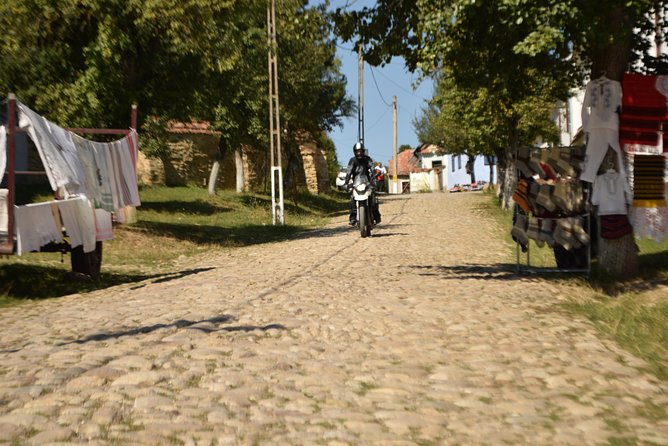
The final stop is Alba Iulia Citadel, a star-shaped fortress with seven bulwarks. Its design is associated with Vauban-style fortifications, and the visit lasts about an hour.
This is a sensible final stop because it brings the focus back to military architecture and Romanian history after several days of castles and high passes. Admission is listed as free. The activity ends back at the meeting point in Turda, so plan your onward journey around returning there rather than assuming you will finish in central Cluj.
Hotels, food, and what the price really covers
The $1,144.09 price includes six nights: one night in a 4-star hotel, three nights in 3-star hotels, and two nights in guest houses. Six breakfasts are included. That mix should appeal to you if you want a comfortable base each night without losing contact with smaller communities.
Lunches, dinners, drinks, fuel, road taxes, parking, attraction tickets, and personal activities are extra. Motorcycle rental is also separate, despite BMW rental being available. Add those costs before comparing this tour with a self-guided rental.
The value comes from the route design and support. You are not only paying for rooms. You also receive an English-speaking motorcyclist guide, daily briefings, a general map, airport transfers, and a guaranteed departure. A group of no more than 10 keeps the riding operation small enough for practical guidance without making it a private tour.
The food side is flexible. Traditional Romanian cuisine and local hospitality are part of the trip’s appeal, but meals are not included. A vegetarian option is available if you request it during booking.
Who will enjoy this motorcycle tour most
I would recommend this trip to a competent rider who wants both road time and culture. You should be comfortable with mountain bends, changing elevation, and long active days. The 1,200 steps at Poienari make moderate fitness more than a box-ticking detail.
This is also a good fit if you prefer a guided trip but still want a small group. Alexe or Alex handles the riding guidance, and Claudia is part of the team that helps with trip arrangements. The detailed routes and friendly support received the strongest praise, along with the quality of the hire motorcycles.
It is less suitable if your main goal is a relaxed castle holiday. The schedule gives many stops only 45 to 60 minutes, and several admission fees are extra. You also need to bring full motorcycle gear: helmet, gloves, jacket, pants, and boots.
The minimum age is 21. You need a valid passport and an unrestricted motorcycle driver’s license at departure. The guide may speak English or Spanish.
Should you book the seven-day ride?
Book it if you want Romania’s famous motorcycle roads with enough castles, monasteries, fortified villages, and local stays to make the trip feel like a full introduction to Transylvania. The Transfagarasan and Transalpina are the headline acts, but the mix with Sighisoara, Biertan, Peles, and Alba Iulia gives you much better value than a single-road excursion.
Think carefully if you dislike extra costs or tight sightseeing schedules. Fuel, meals, tickets, parking, road taxes, and motorcycle rental can raise the final bill, and the booking is non-refundable and cannot be changed after purchase.
For the right rider, this is a well-shaped seven-day route with strong local support. Bring the proper gear, build a realistic spending buffer, and arrive ready for bends, stairs, castles, and a lot of Romanian mountain scenery.
FAQ
How long is the motorcycle tour?
The tour lasts approximately seven days and includes six nights of accommodation.
Where does the tour start and finish?
It starts at Adventure Motorcycle Tours and Rentals Romania, Strada Razboieni 31, Turda, Romania, and ends back at the meeting point.
Is motorcycle rental included?
No. You may bring your own motorcycle or rent a BMW motorcycle, but the rental cost is not included in the stated tour price.
What accommodation is included?
The package includes one night in a 4-star hotel, three nights in 3-star hotels, and two nights in guest houses.
Are meals and attraction tickets included?
Six breakfasts are included. Lunches, dinners, drinks, fuel, parking, road taxes, and admission fees for attractions are not included.
What documents and equipment do I need?
You need a valid passport, an unrestricted motorcycle driver’s license, and motorcycle gear including a helmet, gloves, jacket, pants, and boots.
Just added around the world
- Visit 5 Districts & The Hidden Gems In Saigon By Motorbike★ 5.0 · 8 reviews
- Motorcycle rental Trogir / BMW F850GS / Your own motorbike tour★ 5.0 · 2 reviews
- Motorbike adventures on a dual purpose motorbike in the Garden Route and Karoo.★ 5.0 · 3 reviews
- 1250cc Motorcycle Rental from Turda★ 5.0 · 4 reviews
- Angkor Wat Bakeng Sunset by Motorcycle Private Tour★ 5.0 · 2 reviews
- Motorcycle day tour to Rila monastery★ 5.0 · 2 reviews
- Bali Motorbike City Tour★ 5.0 · 2 reviews
- Blue Eye Motorbike Tour★ 5.0 · 10 reviews
7-Day Experiences, compared.
Leh Ladakh Motorcycle Tour – 7 Days Of Ultimate Thrill
Read our review →